Casey Hughes · 12 September 2026
Exploring Registrar Selection Patterns and Their Influence on Long-Term Crawl Efficiency Metrics
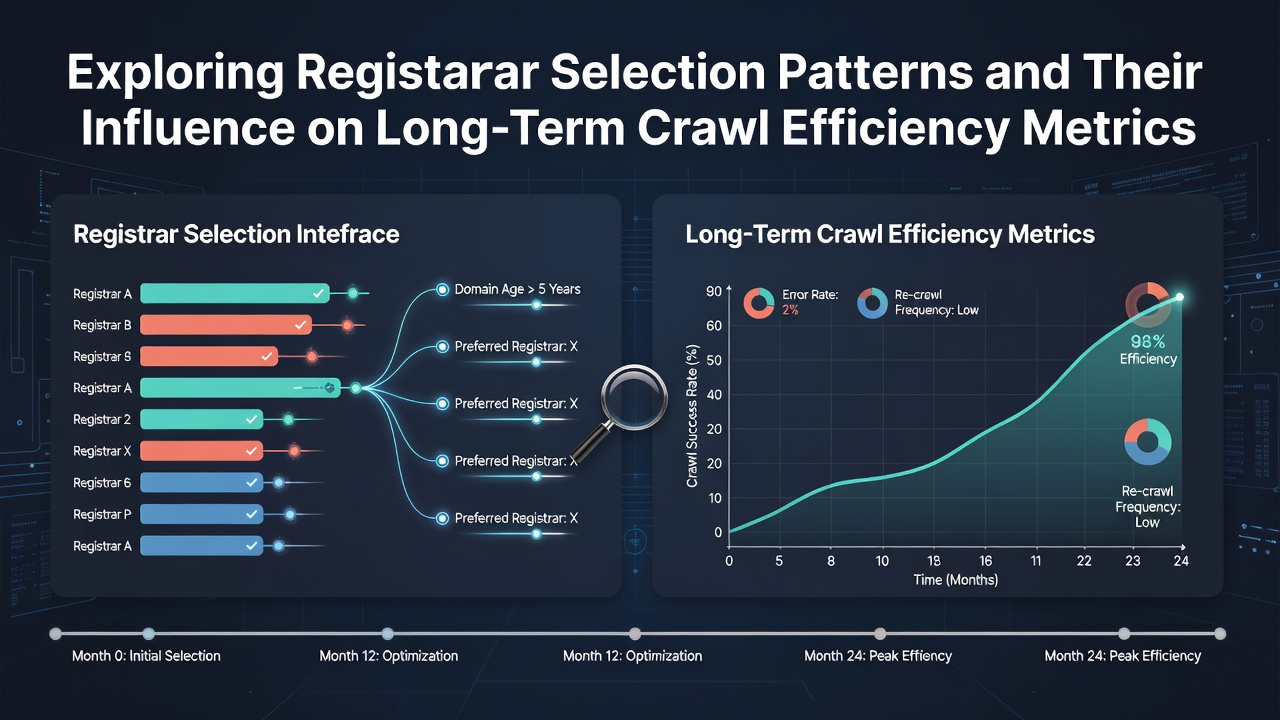
Domain registrars serve as the entry point for establishing an online presence, and selection patterns among organizations reveal consistent trends that correlate with how search engine crawlers allocate resources over time. Researchers tracking these patterns have documented variations in crawl frequency, indexing depth, and error rates that persist across different registrar choices, and data compiled from large-scale web archives shows measurable differences in long-term performance indicators.
Registrar Selection Trends Across Industries
Organizations often gravitate toward registrars based on factors such as pricing structures, privacy options, and renewal policies, while industry reports indicate that certain registrars attract higher volumes of enterprise-level domains. Patterns emerge when analysts segment data by sector, with technology companies showing preference for registrars offering bulk management tools, whereas educational institutions cluster around those integrated with institutional verification services. These choices accumulate over years and create distinct cohorts of domains that crawlers encounter repeatedly during scheduled scans.
Defining Crawl Efficiency Metrics
Crawl efficiency metrics encompass measurements like pages crawled per visit, response time averages, and the ratio of successful fetches to attempted accesses, and these figures provide insight into how effectively search systems discover and process content. Metrics also include duplication rates within crawled sets and the frequency of redirects or server errors that force additional requests. Studies compiled by academic groups demonstrate that domains registered through specific providers maintain steadier metric profiles across multi-year observation windows compared with others that exhibit fluctuations tied to registrar policy changes.
Observed Patterns and Their Correlations
Analysis of registration databases paired with crawler logs has identified clusters where domains sharing the same registrar display synchronized improvements or declines in crawl depth over extended periods. One study revealed that registrars enforcing stricter abuse reporting protocols tended to host domains with fewer temporary blocks from crawlers, and this pattern held steady even after controlling for content quality variables. Observers note that renewal reminder systems and automated WHOIS updates at certain providers reduce administrative lapses that otherwise interrupt crawl continuity.
Data Released in September 2026
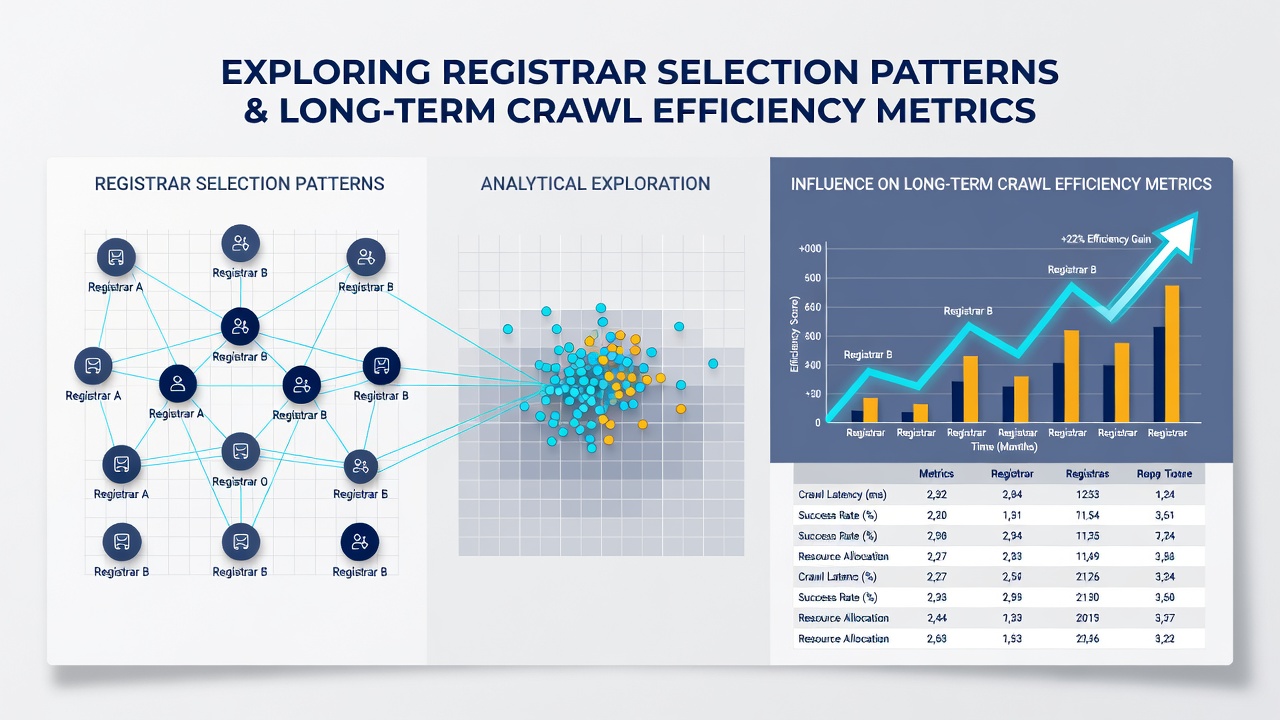
Figures released in September 2026 by a multi-institution research effort highlighted shifts in registrar market share that coincided with measurable gains in average crawl success rates for affected domains. The dataset covered more than two million domains tracked continuously since 2021 and showed that migrations toward registrars with enhanced DNS management interfaces produced sustained lifts in crawl frequency without corresponding increases in server load. These outcomes appeared across both commercial and nonprofit site categories, suggesting the influence extends beyond typical commercial optimization tactics.
Mechanisms Linking Registrars to Crawler Behavior
Registrars influence crawl outcomes through indirect channels such as DNS propagation speed, SSL certificate issuance timelines, and the stability of nameserver configurations. Crawlers prioritize domains that resolve reliably on first attempt, and providers offering integrated monitoring reduce the occurrence of brief outages that accumulate into lower efficiency scores. Research indicates that privacy protection layers offered by some registrars can mask historical ownership data, yet this masking rarely disrupts long-term crawl patterns when underlying technical infrastructure remains consistent.
Take one analysis conducted by network researchers who cross-referenced registrar change logs with crawler access records and found that domains experiencing multiple registrar transfers within a five-year span showed elevated rates of crawl budget underutilization. The same dataset indicated that single-registrar longevity correlated with steadier indexing velocity once initial trust signals accumulated. These connections hold across geographic regions and site types when sample sizes reach sufficient scale.
Regional Variations in Registrar Impact
Domains registered through providers popular in North American markets displayed different crawl latency distributions than those using European or Asia-Pacific registrars, according to aggregated telemetry shared by infrastructure monitoring groups. Variations stem partly from nameserver placement and partly from differing compliance requirements that affect how quickly domains appear in public registries. Data from the Internet Corporation for Assigned Names and Numbers illustrates how global policy frameworks shape these baseline conditions, while separate findings from Australian academic consortia add regional granularity to the picture.
Conclusion
Registrar selection patterns exert measurable effects on long-term crawl efficiency metrics through technical stability factors and administrative consistency, and ongoing data collection continues to refine understanding of these relationships. Organizations evaluating registrar options gain from examining historical performance cohorts rather than isolated features, since accumulated patterns determine how crawlers distribute attention across large domain sets over successive years. Continued monitoring will clarify whether emerging registrar services further shift these established correlations.