Mia Coleman · 26 September 2026
How Domain Age Milestones Shape Long-Term Visibility Trends in Niche Markets
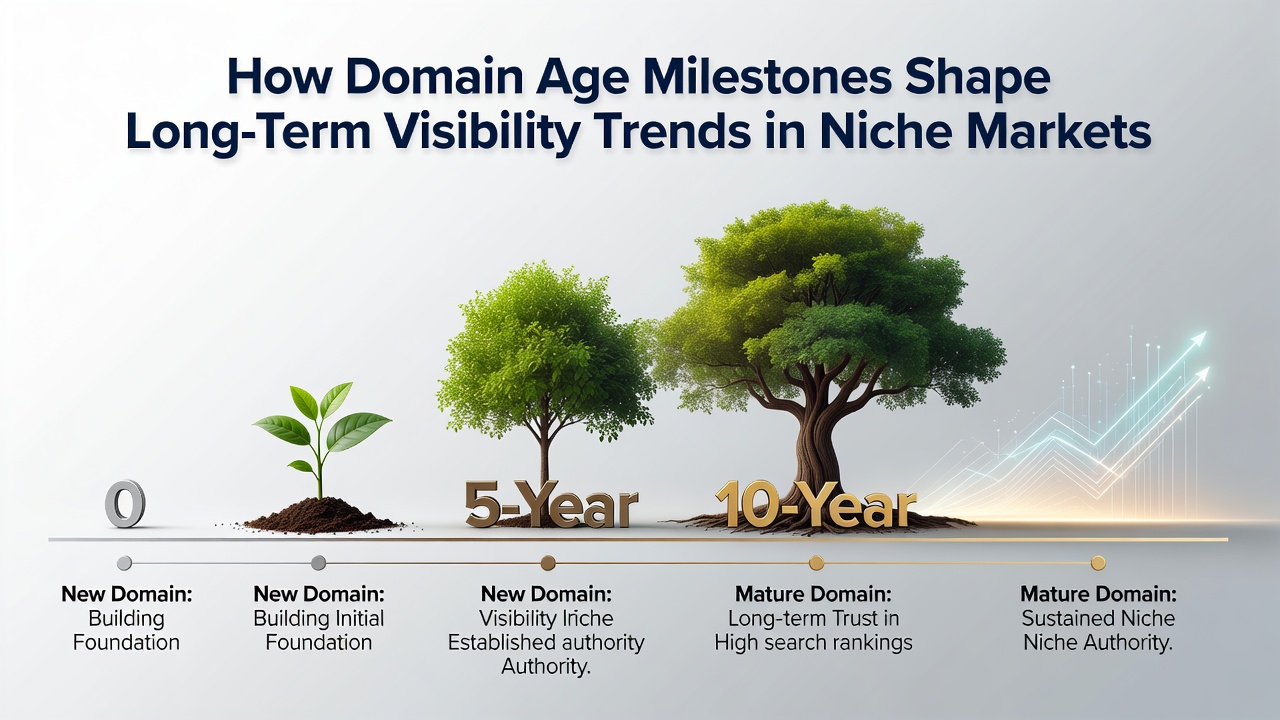
Domain age serves as a foundational element in how search engines and other visibility platforms evaluate websites over extended periods, particularly within specialized market segments where competition often hinges on accumulated signals rather than immediate content volume. Researchers have tracked this factor through longitudinal data sets that span multiple years, revealing patterns tied to registration dates and subsequent development phases. In niche markets such as specialized equipment suppliers or targeted educational resources, these milestones influence indexing frequency, trust indicators, and positioning stability in ways that newer domains must navigate carefully.
Early Registration Phases and Initial Visibility Patterns
Domains registered within the first twelve months typically encounter slower accumulation of external references, as crawlers prioritize established signals when determining crawl priority. Studies from academic institutions show that this period often coincides with limited backlink growth unless proactive outreach occurs, which can delay broader recognition in competitive niches. Observers note that search algorithms apply cautious weighting during this window, leading to visibility that depends more on technical optimization than on historical presence. As registration approaches the two-year mark, certain platforms begin incorporating stability metrics that reward consistent content updates and server reliability.
Mid-Term Milestones and Signal Accumulation
Between three and five years of age, domains frequently demonstrate accelerated visibility gains in niche sectors because external entities start referencing them more readily through industry directories and collaborative networks. Data from the European Commission's digital economy reports indicates that this phase aligns with increased crawl efficiency, where algorithms recognize patterns of sustained activity. Niche market participants often observe that domains reaching this threshold benefit from layered authority signals built through repeated topic-focused publications, which in turn support steadier rankings amid algorithm adjustments. Yet the transition remains dependent on factors like hosting consistency and content relevance rather than age alone.
Long-Term Establishment Beyond Five Years
Domains exceeding five years in age tend to exhibit more predictable visibility trends in niche markets, where historical data contributes to resilience against ranking fluctuations. Research conducted at institutions including those affiliated with Canadian digital policy studies reveals that these older domains accumulate diversified link profiles over time, which buffers against isolated content changes. In September 2026, analysts reviewing global indexation data noted that such domains maintained higher average positions in specialized queries compared to newer entrants, particularly when paired with ongoing maintenance practices. This stability arises because platforms interpret extended registration periods as indicators of operational continuity, though actual outcomes vary based on market saturation levels.
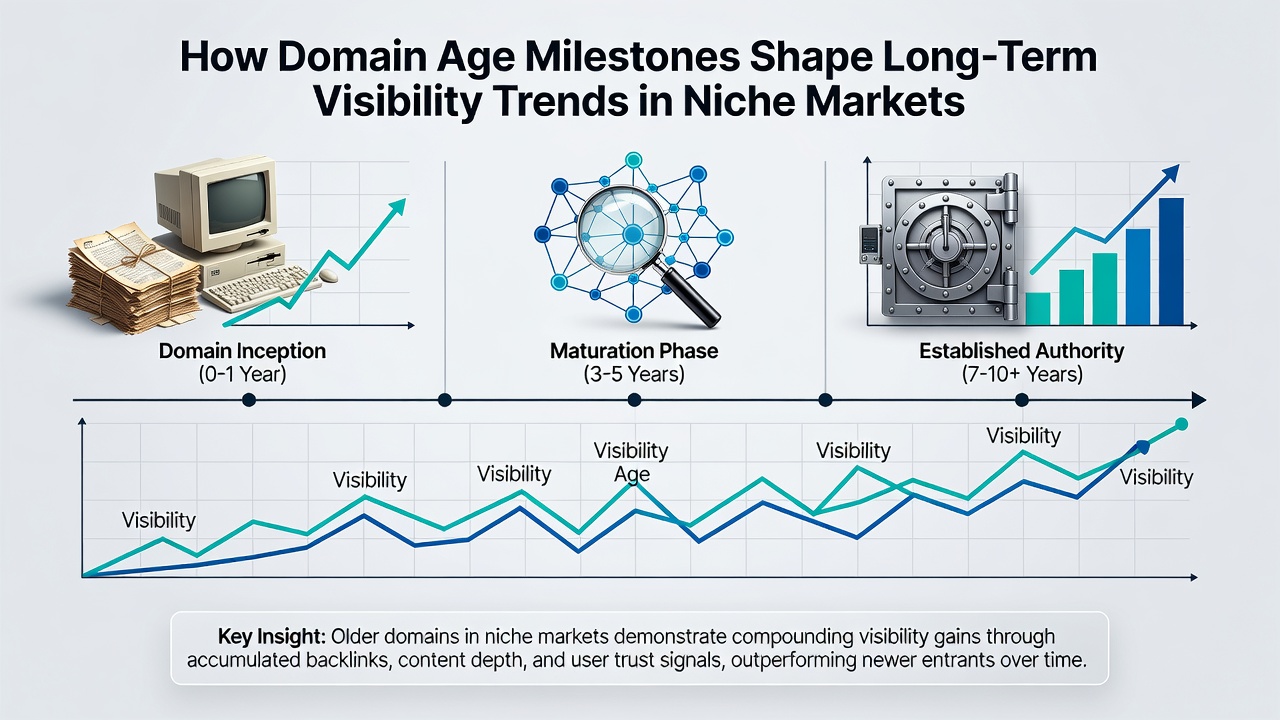
Additional milestones around the seven- and ten-year marks further reinforce these trends, as cumulative references from peer sites strengthen domain-level trust metrics. Those tracking visibility metrics across multiple niches report that domains in this range often require fewer interventions to sustain presence, since prior activity has already established baseline authority. External links from regulatory analyses, such as those published by the Australian Competition and Consumer Commission on digital marketplace dynamics, underscore how sustained domain presence correlates with measurable improvements in discoverability for sector-specific queries.
Comparative Dynamics Across Different Niche Environments
Niche markets with high entry barriers, including specialized manufacturing tools or academic resource hubs, show distinct visibility curves tied to domain age when contrasted against less crowded segments. Figures from industry reports compiled by organizations like the Internet Society highlight that older domains in these areas leverage time-based advantages to secure featured placements more consistently. Meanwhile, emerging niches may compress these timelines through rapid content proliferation, though the underlying reliance on age-related signals persists. People monitoring these patterns find that domains crossing the decade threshold frequently display compounding benefits from archived content that remains indexed and referenced.
Conclusion
Domain age milestones continue to interact with visibility mechanisms in measurable ways across niche markets, as evidenced by ongoing data collection from multiple sources. Patterns established through registration history provide context that influences long-term positioning, with transitions at key intervals shaping how platforms allocate resources to indexing and ranking. Continued observation of these trends through 2026 and beyond will clarify further interactions between age, content strategies, and external ecosystem factors.