Casey Hughes · 10 October 2026
Shifting User Intent Signals Across Multi-Year Domain Lifecycle Phases in Localized Search Ecosystems
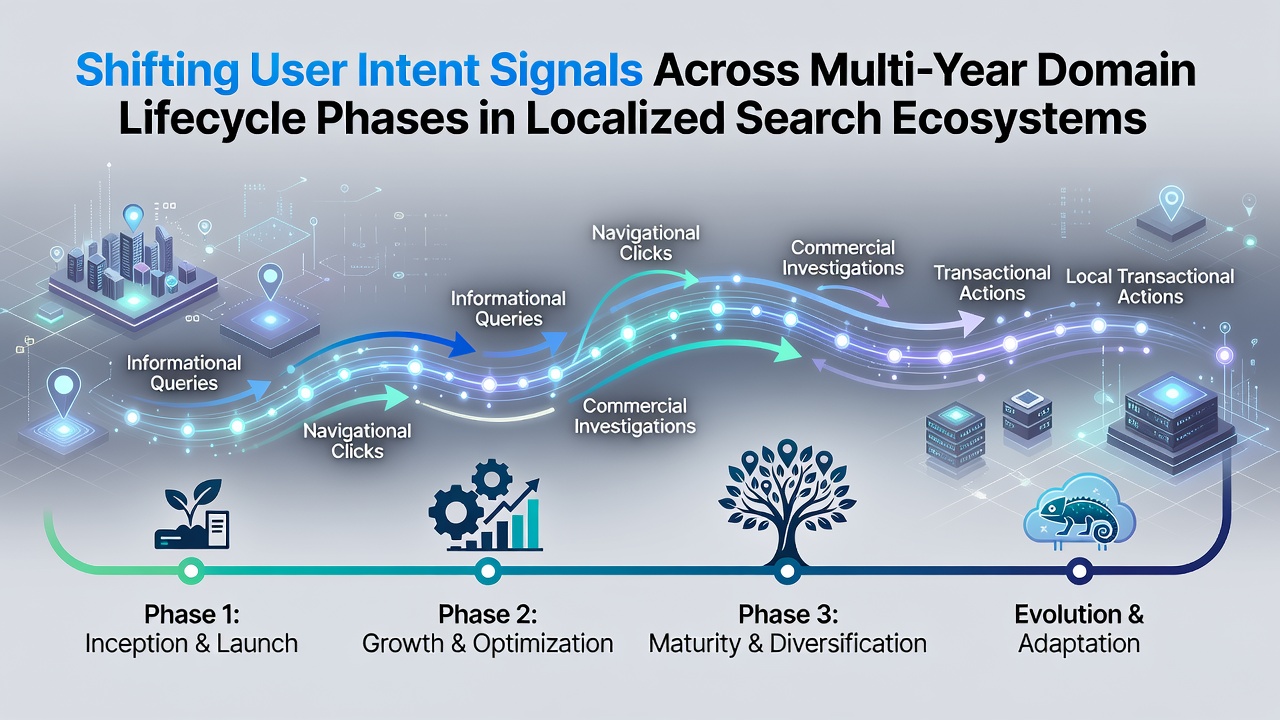
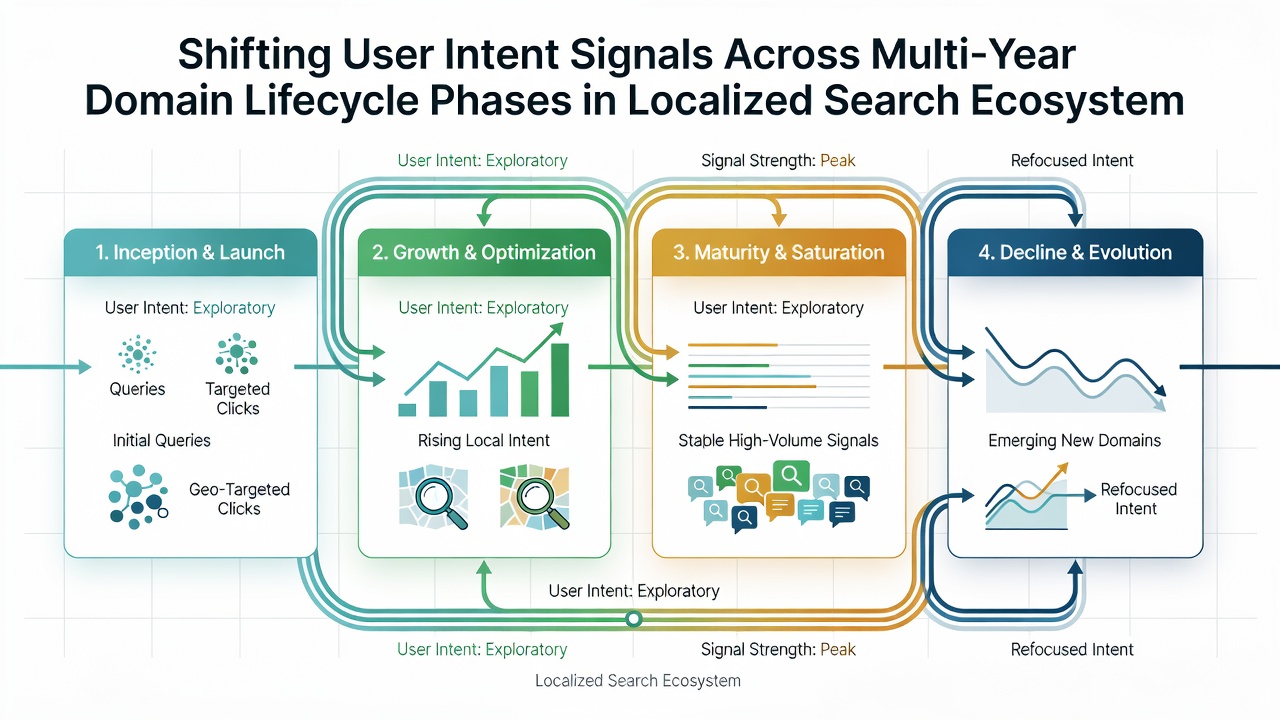
Domain registration marks the starting point where initial user intent signals tend to cluster around discovery and basic informational queries in localized search ecosystems, and researchers tracking these patterns across multiple regions note that early-phase queries often reflect broad category exploration rather than specific brand recognition. Data collected from search engine logs shows that navigational intent remains low during the first 12 to 18 months while informational signals dominate, particularly in markets where local language variations influence query formulation. Studies of European and North American search datasets indicate that these early signals align closely with regional consumer education cycles, which in turn shape how algorithms prioritize content freshness over established authority metrics.
Initial Registration and Emerging Query Distributions
During the first lifecycle phase, localized ecosystems demonstrate distinct patterns where transactional intent surfaces unevenly across urban versus rural search volumes, and figures from digital economy reports reveal that cities with higher mobile penetration rates generate earlier spikes in commercial queries. Observers analyzing multi-year datasets find that domain age correlates with gradual intent diversification, yet the shift remains slower in non-English language markets where cultural search behaviors introduce additional variables. Government statistical agencies in Canada and Australia have documented how these distributions evolve differently by province and state, providing granular breakdowns that highlight the role of seasonal local events in modulating intent strength.
Mid-Phase Transitions in Regional Search Behavior
As domains enter their second and third years, intent signals begin to incorporate more navigational elements tied to specific geographic modifiers, and analysis of search trend data confirms that users increasingly append city names or neighborhood terms to core queries. This transition coincides with improved crawl efficiency and indexation depth, which in turn allows algorithms to surface localized results with greater precision. One notable dataset covering the period through October 2026 illustrates how mid-cycle domains in competitive verticals experience measurable upticks in mixed-intent queries that blend informational and transactional components. Researchers examining these shifts across Asian and Latin American markets note that language-specific intent signals mature at different rates, influenced by local advertising ecosystems and mobile usage patterns.
Maturity Phase Stabilization and Signal Refinement
Domains reaching four or more years exhibit stabilized intent profiles where navigational queries predominate in high-competition locales, while informational signals persist in emerging markets with lower domain density. Evidence from academic studies on search engine behavior indicates that this stabilization phase also features increased sensitivity to local regulatory updates, such as data protection frameworks that affect how personal location data influences result ranking. Those who have examined longitudinal query logs observe that transactional intent strengthens during this period when domains accumulate region-specific backlink profiles, although the exact contribution varies by search engine market share in each territory. Australian and EU statistical sources tracking digital commerce activity provide supporting metrics that tie these refinements to broader economic indicators rather than isolated domain factors.
Renewal Cycles and Intent Recalibration Patterns
Renewal events introduce temporary recalibrations in user intent signals, particularly when ownership changes trigger content updates that realign with current local search trends. Research indicates these recalibrations appear most pronounced in sectors where consumer preferences shift rapidly due to regional economic conditions or policy changes. Multi-year tracking across North American and European datasets shows that domains undergoing renewal without content modernization often experience temporary dips in navigational intent as algorithms re-evaluate relevance signals. Observers note that localized ecosystems in smaller language markets demonstrate slower recovery trajectories during such periods, underscoring the interplay between domain lifecycle events and regional query ecosystems.
Conclusion
Longitudinal examination of shifting user intent signals reveals consistent phase-based patterns that vary meaningfully across localized search ecosystems, and continued data collection through 2026 and beyond will further clarify how these dynamics interact with evolving regional search technologies. The available evidence from government agencies and academic institutions underscores the value of monitoring intent distributions at each lifecycle stage rather than treating signals as static properties of individual domains.